The Stars Are Far Away. Pensions Are Not.
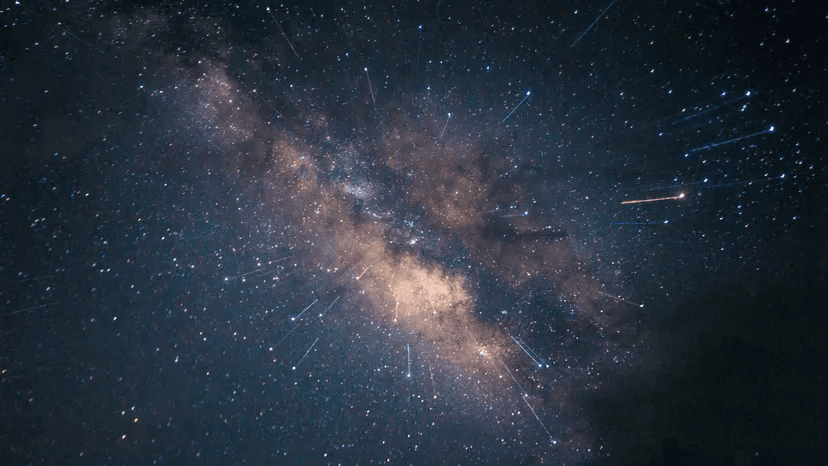
Looking up at the stars has always seemed like a dream shared by all of humanity. We like to talk about the universe, about Mars, about stars millions, billions, even tens of billions of light-years away. When humans first landed on the Moon, the whole world watched. When a new telescope sends back images from deep space, people still stop and stare.
Exploring the universe feels like something that naturally belongs to all of us. We even like to imagine that human thought itself may have begun with someone looking up.
Long ago, perhaps one of our early ancestors raised his head and truly noticed the vast night sky above him. He did not know that Earth was a planet. He did not know that the Sun was a star, or that beyond those tiny points of light were countless other worlds. But perhaps, for a moment, he asked a very simple question:
What is that?
In that sense, the night sky has never been merely scenery. It represents something strange about us. Even though we first have to eat, sleep, avoid danger, and survive until tomorrow, we still seem unable to stop wondering what lies beyond the mountain, beyond the ocean, and beyond the sky.
We all share the same sky. And yet, sometimes I feel that looking up at it has quietly become a kind of luxury, a romantic indulgence for people who have enough space in their lives to look up. Not because people do not care about the stars. But because the stars are very far away.
A long time ago, out of curiosity, I started looking through the annual revenue and spending of the United States government. At the time, I naturally assumed that science and technological innovation would take up a large part of the budget.
After all, when we think of the United States, we think of Silicon Valley, NASA, artificial intelligence, semiconductors, and university laboratories. So many of the technologies that changed the world over the past few decades are connected, in one way or another, to this country. So I imagined that perhaps for every ten dollars the government spent, one dollar went toward discovering or building something new.
Then I looked at the numbers. That was not the case at all. Compared with total federal spending, research and development amounted to only a few percent. The first time I saw that number, I was surprised.
Not because a few hundred billion dollars is a small amount of money. Of course it is not. But once it was placed beside everything else a government spends money on, it suddenly looked much smaller than I had imagined.
Far more money goes to Social Security, Medicare, defense, interest on debt, and all the ordinary systems that have to keep functioning every day because real people depend on them every day. And then something very simple occurred to me.
Mars will never ask you to pay rent. A distant galaxy will not lose its health insurance because a payment failed to arrive this month. A scientific project that may not produce results for another fifty years will never complain that its pension cheque is late. But people will.
Healthcare matters now. Rent matters now. Retirement matters now. Life matters now.
I do not think spending money on space is a waste. Quite the opposite. I have always thought there is something deeply romantic about the fact that human beings are willing to spend enormous amounts of time, money, and effort simply because we want to know what is out there.
We can build a telescope, send it more than a million kilometers away from Earth, and point it at a tiny patch of almost empty sky, simply to catch light that has been traveling through the universe for billions of years.
That light will not lower our rent. It will not pay our medical bills. It may not produce anything useful within our lifetimes. And still, we want to see it. I think there is something precious about that.
But people cannot spend all their time looking at the sky. If someone is worried about paying next month's bills, it is difficult to ask them to care first about what is happening billions of light-years away. If an elderly person depends on a pension to live, it is difficult to tell them that more money should instead be spent on a scientific question that may not be answered for decades.
We often say that humanity should explore the universe. But once the word humanity is broken apart, it turns out to be billions of individual people trying to live their own lives. Each of them has rent to pay, work to do, parents, children, illnesses, and a tomorrow to worry about.
And so some of the grandest dreams we claim to share as a species suddenly become less grand the moment someone has to pay for them. I do not think there is anything wrong with that. Perhaps it is the most natural thing in the world.
Still, whenever I look at the night sky, I find the contrast strangely beautiful. We live in a civilization capable of sending telescopes more than a million kilometers from Earth, a civilization capable of seeing light that began its journey more than ten billion years ago.
And at the same time, most of our attention still has to be spent on painfully ordinary things. What time do I work tomorrow? How much is rent this month? Will I have enough money when I retire?
Perhaps these two things were never in conflict. There is a part of us that will always want to raise our heads and see what lies beyond the mountain, beyond the ocean, and beyond the sky. And there is another part of us that will always need to think about tomorrow's breakfast first.
People look up at the stars.
People live in the present.